
What are the effects of excess moisture in buildings?
When internal conditions are thermally acceptable and building materials are maintained in good condition, the building can be said to have a ‘moisture balance’. If, however, the internal conditions do not stay within acceptable levels (e.g. they become too humid or too dry), or there are visible moisture-related consequences (e.g. mould growth, materials decay, corrosion, etc), the building is said to be moisture imbalanced.
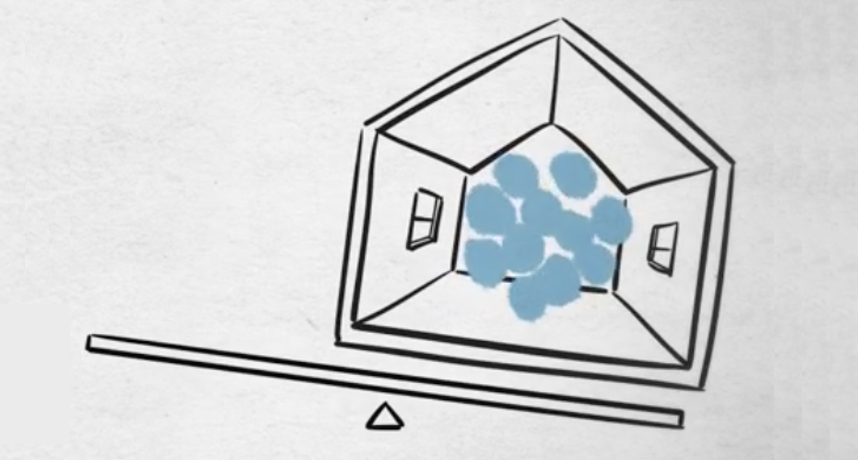
This imbalance can develop gradually and may not always be visible at first, but over time it can lead to physical deterioration and poor indoor air quality.
Excessive moisture can alter the balance of the building and may affect both its integrity and the health and wellbeing of its occupants. Some common consequences of imbalanced buildings are presented below and briefly described in the following sections.
- Expansion and contraction
- Corrosion
- Spalling: frost damage
- Efflorescence: salts crystallisation
- Delamination
- Reduced thermal resistance
- Dust mite
- Wood rot
- Mould growth
Moisture-Safe Homes: Understanding and Managing Condensation, Damp, and Mould

Moisture-Safe Homes: Understanding and Managing Condensation, Damp, and Mould





