
What are the health risks associated with indoor mould?
As we have seen, mould growth indoors not only damages materials but can also affect the health of occupants. A growing body of research links exposure to mould-contaminated environments with a range of respiratory and allergic conditions. While not everyone is equally affected, those with allergies, asthma, or weakened immune systems may be especially vulnerable.
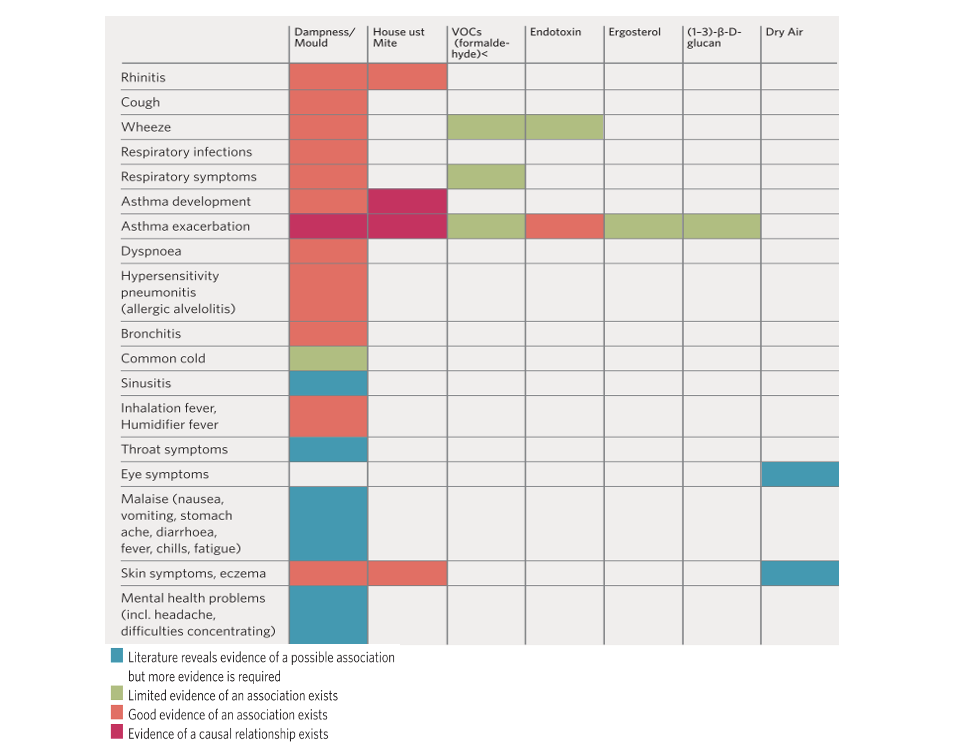
To better understand these health impacts, the figure above presents a summary of known causal and associational links between indoor moisture and health outcomes. This table is drawn from the UK Centre for Moisture in Buildings (UKCMB) report Health and Moisture in Buildings, which compiles findings from an extensive review of peer-reviewed academic and medical literature.
The UKCMB report examines how excess moisture in buildings, often leading to mould growth, can impact occupant health. It highlights the growing concern that modern construction practices and occupancy patterns may be contributing to an increased risk of indoor dampness. Despite strong associations, the report notes that proving direct causality remains challenging due to the complex interplay of environmental, biological, and behavioural factors, as well as limitations in current research methods. Nevertheless, the scale of the issue is significant: even cautious estimates suggest that there are over a million damp homes in the UK, potentially affecting millions of people and placing a substantial burden on the NHS and the broader economy. This estimate draws on findings from the English Housing Survey and UKCMB’s analysis of national housing data. The report calls for more robust evidence to inform effective policy, industry standards, and occupant behaviour aimed at reducing health risks from damp and mould.
In the following sections, we will explore in more detail how mould exposure can affect human health, including its links to respiratory conditions, allergies, and other biological responses. This deeper understanding is crucial for developing effective strategies to enhance indoor environments and safeguard vulnerable occupants. Understanding these links helps policymakers, landlords, and residents prioritise moisture management as a public health issue rather than just a maintenance concern.
Moisture-Safe Homes: Understanding and Managing Condensation, Damp, and Mould


Moisture-Safe Homes: Understanding and Managing Condensation, Damp, and Mould





