Forensic Archaeology and Forensic Anthropology
What is Forensic Anthropology and Archaeology?
The terms ‘forensic archaeology’ and ‘forensic anthropology’ are widely misused in the popular media today and this can be a source of confusion. The word forensic derives from ‘forensis’ meaning ‘open court’ and ‘forensic evidence’ is that pertaining to a crime or court of law. Archaeological and anthropological techniques can be applied and adapted to the forensic context.
Over the last few decades, separate strands of research have emerged in anthropology and archaeology to adapt and develop skills for forensic cases. For example, there has been a lot of research on the rate of decay of bodies within different environments, or on what happens to a body when it is burned (see Week 6). This research is then applied to help the police investigate cases of decomposed or burned human remains from crime scenes.
What’s the Difference Between Forensic Anthropology and Forensic Archaeology?
Many people, including forensic experts, get these mixed up. Part of the confusion stems from the fact that there are overlapping skills between these two disciplines. Furthermore, in some countries, such as the USA, archaeology is a sub-discipline of anthropology. Therefore in the USA people with qualifications in anthropology often have some archaeological skills. In the UK, archaeology is usually taught in a separate academic department to anthropology and is regarded as a distinct discipline.
- A forensic anthropologist is an expert in the body.
- A forensic archaeologist is an expert in the context (environment of burial and wider landscape) and excavation.
Because of the different skills it is important to maintain the distinction between forensic archaeology and forensic anthropology. These are each highly specialised subjects and require extensive training.
Forensic Archaeology
Forensic archaeology is the application of excavation and archaeological skills to forensic contexts. These skills include:
- locating bodies
- understanding the relationship between the grave and other buried features (e.g. soil layers, personal effects, drainage ditches)
- understanding what happens to the body in the ground (known as depositional and taphonomic processes).
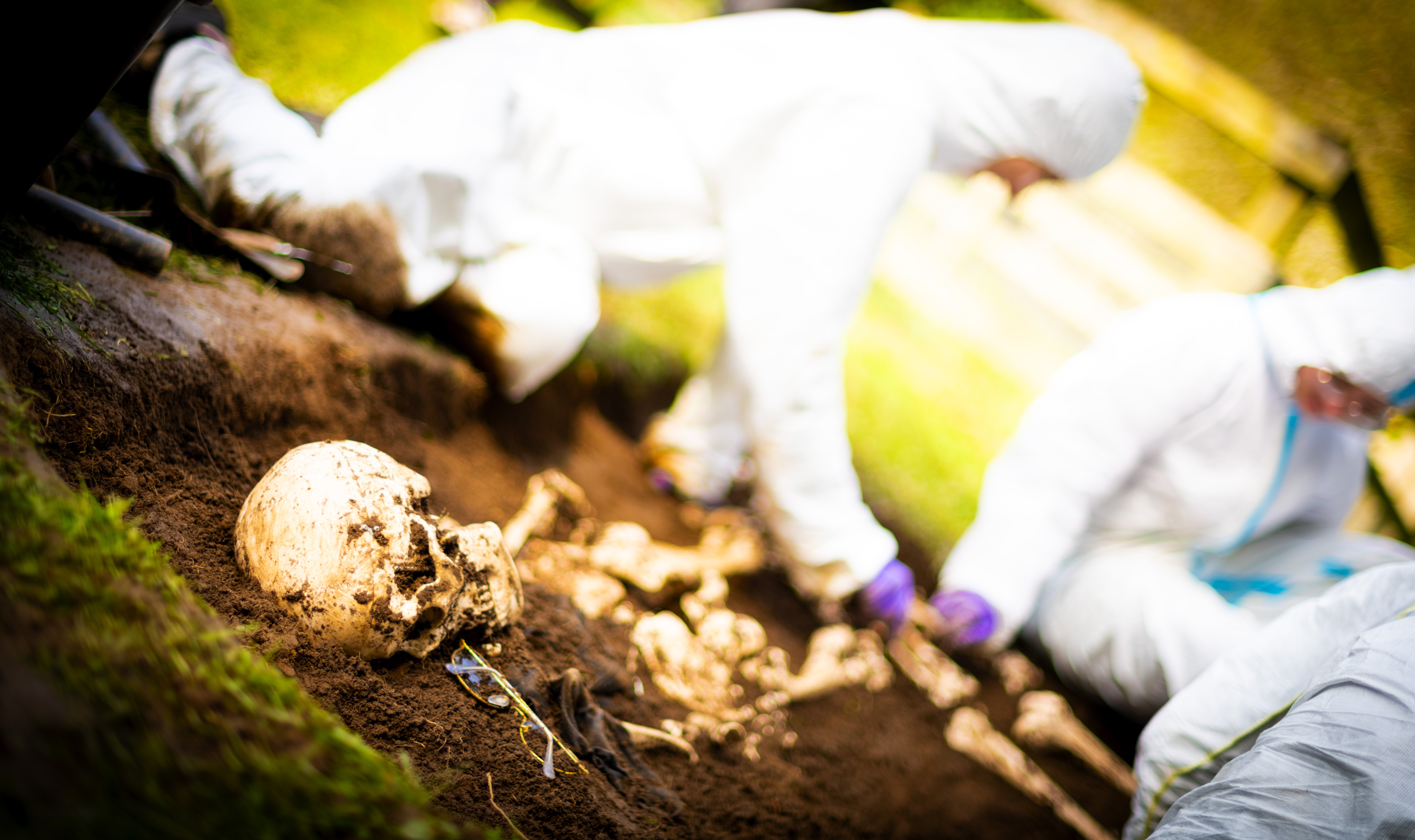
Forensic archaeologists are also experts in excavating graves and creating detailed records of the relationships between objects, bodies/skeletons and features within the burial environment.
Forensic Anthropology
Forensic anthropology is the application of analytical skills pertaining to a body/skeleton within a forensic context. These analytical skills include:
- understanding the processes and effects of decay on the body
- extracting information pertaining to age, sex, stature, ancestry and pathology
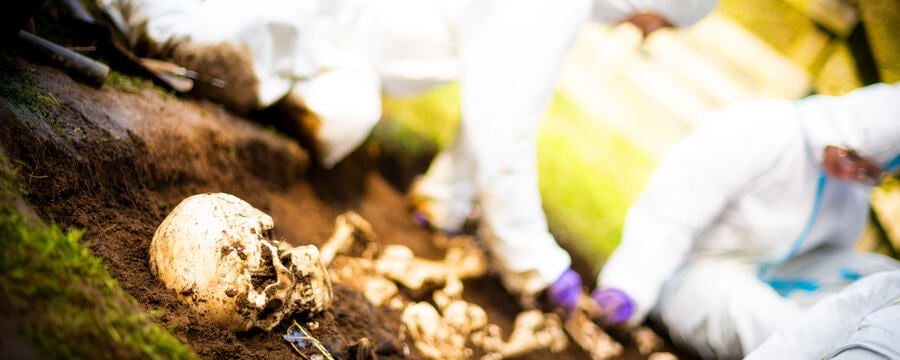
Forensic archaeologists and forensic anthropologists are often employed together to search, excavate (if necessary) and recover human remains.