Welcome to Week 2 of the course. This week we will look a bit more closely at an all-important component of any machine learning model, the input data and associated …
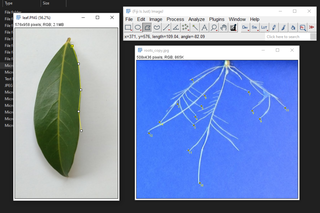
This week we looked at data and features, and in particular how to extract features from image data. This practical shows how to pre-process (by reshaping) a batch of images, …
We’ve seen in the previous videos various ways in which we might encounter missing data, and different ways in which we can handle this. In this article we look at …
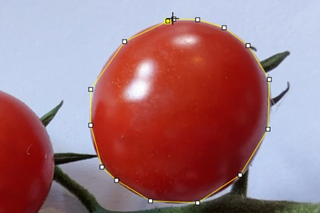
In order to train machine learning on image data, we often need to label regions of images. To do this, we could use simple image painting tools to “colour in” …
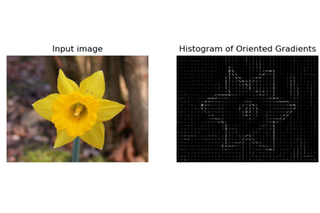
In the previous video we looked at Histogram of Oriented Gradients or HOG, a common method to extract edge information as features from image data. This article gives a quick …
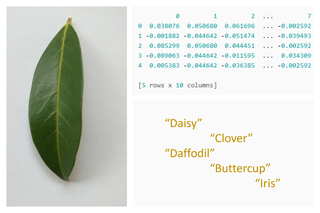
What data types might you see in a features matrix? The different columns in a features matrix can be any of a number of different data types, including the following: …
Congratulations on completing Week 1 of the course. So far we have looked at many of the key concepts concerning datasets, and types of machine learning models you might encounter, …
The previous video ‘Machine Learning Tasks’ introduced the main types of problems to which we can apply machine learning that we’ll look at in this course. This article provides a …
This videos looks at some of the terms you might encounter in machine learning, including: observation / instance attributes and features dimension model extrapolation parameters epoch, learning rate and hyperparameters …
A closer look at the core machine learning tasks of classification and regression. In binary classification we are looking for a yes or no answer. In multiclass classification there are …
A step by step introductory example. Given numerical data of dimensions of petals and sepals of three different species of Iris flowers, how can we make a machine learning model …
How do we apply machine learning techniques to image data in particular? In this video we will dive straight into some examples. All the important techniques and concepts we introduce …
The first step in any machine learning project is to access and inspect the data. In this practical we will open a sample dataset, plot some information from it, and …
How much data do we need to train a machine learning model? This isn’t straightforward to answer, and depends on the problem. This video gives some guidance on what to …
Image data comes with its own set of things you might need to consider at the pre-processing stage. This video gives a brief overview, including topics like transforming, smoothing and …