
Technology to support effective monitoring of trichiasis surgery: TT Tracker
Why monitor?
To reduce visual loss from trachomatous trichiasis (TT) and move towards elimination of trachoma as a public health problem it is important to:
-
Know how many people have been identified with trichiasis and where they are located.
-
Identify who has been treated and how. And know which patients need follow up visits.
-
Understand the results of treatment (how surgeons are performing) and support improvement as needed.
-
Create a clear and accessible data set of all surgery activity in a country.
Various monitoring systems for trichiasis surgery have, in the past, been developed by national trachoma elimination programmes and donors. But different data management and reporting systems for different purposes make things difficult for surgeons, their supervisors and programme managers.
The World Health Organization recognised the challenge and convened a meeting in 2015 to discuss the development of a common system to track TT patients through the steps of surgical intervention. In response, Sightsavers developed the Trichiasis Tracker (TT Tracker).
Who needs the TT Tracker?
The information and reports collected and managed in the TT Tracker are needed by trichiasis surgeons, their supervisors, trachoma programme managers, the ministries of health, and supporting partners.
High level process flow diagram of the TT Tracker system
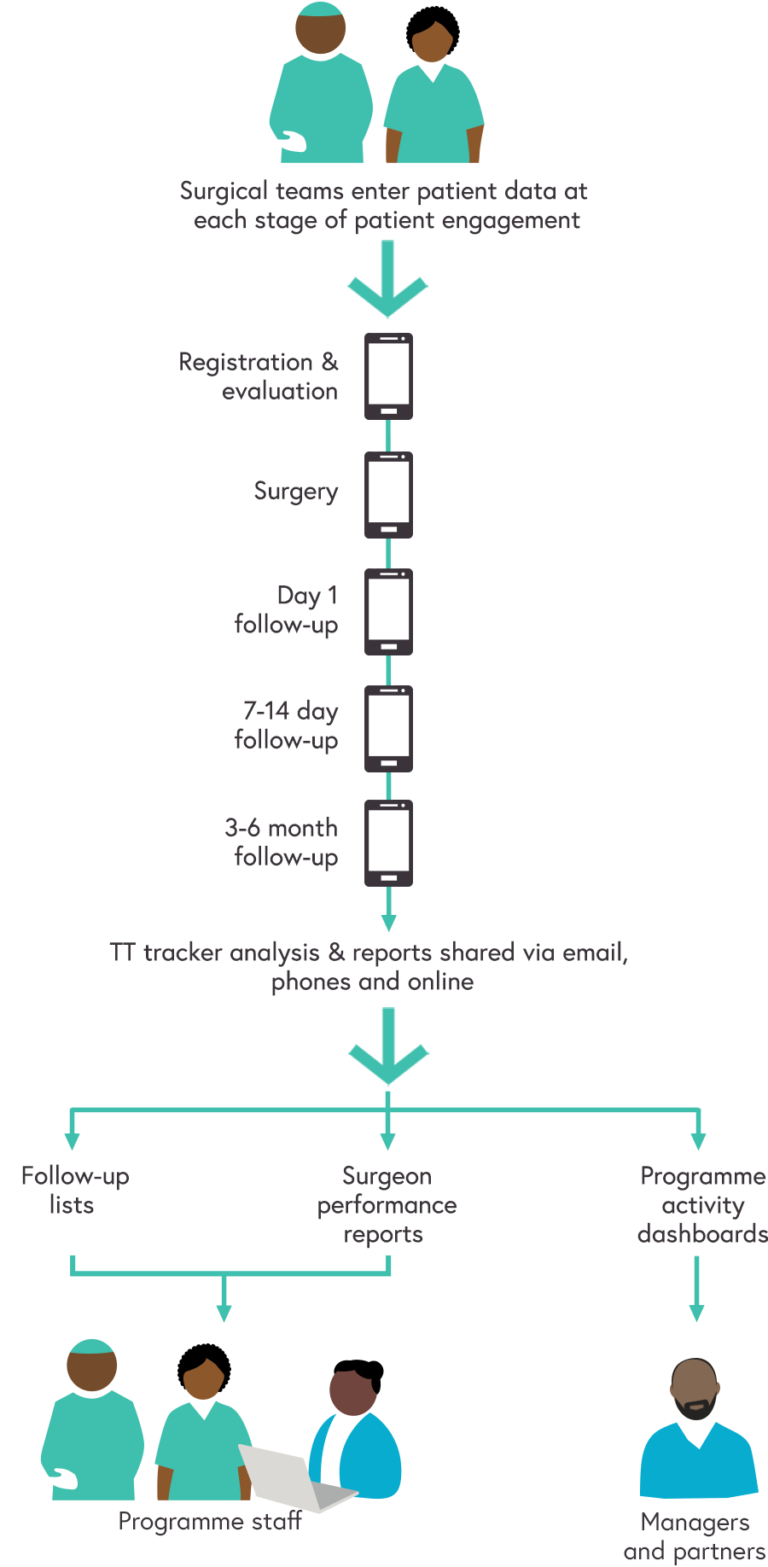
How TT Tracker works
Information collected on phones
Surgical teams use Android-based electronic forms to enter patient information at each stage of the patient’s journey:
-
Registration and evaluation. Demographic information, TT diagnosis, recommended intervention
-
Surgery. Type of operation/sutures, name of surgeon, related complications.
-
Follow-up (at 24 hours, 7-14 days, and 3-6 months). Surgical outcome assessment and actions required to address complications.
Each patient has a unique ID and can be searched for by name on phones within defined coverage areas.
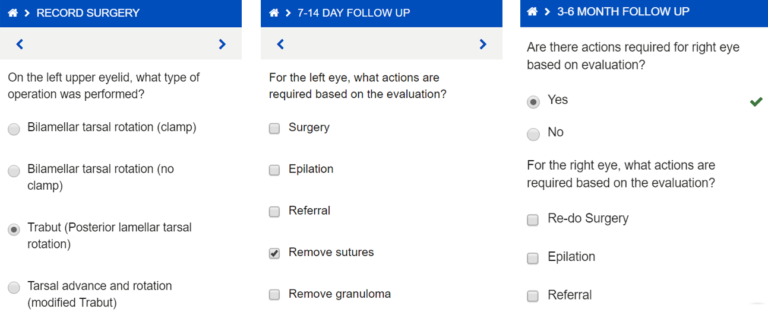
Examples of TT Tracker patient data collection forms (left to right): Surgery, 7-14 day follow-up and 3-6 month follow-up
(Click to enlarge)
Reports are generated by the TT Tracker system
Patient follow-up lists. After surgery, patients are automatically placed on the appropriate follow-up list; lists can be accessed on the phones, online or via email by programme staff and officials approved by the Ministry of Health.
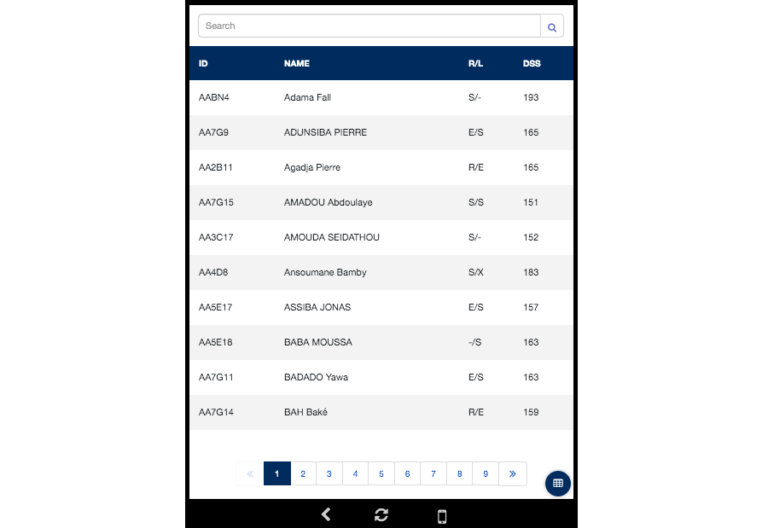
Example of a follow-up list of patients in one district
(Click to enlarge)
-
ID and Name = Patient’s unique identifier and name
-
R/L = Eyes operated (R/L) and the surgical procedure carried out – epilation (E), surgery (S), referral (R) or refusal (X)
-
DSS = Days Since Surgery.
Follow-up lists are searchable by ‘Name’ and ‘Patient ID’. Surgeons can also click on ‘Name’ to see the full patient history and fill out additional follow-up forms as needed. Note that the names listed above were created for training purposes and are not real patients.
Surgical performance: The TT Tracker generates performance assessments for each surgeon so supervisors know when further supervision or training is needed. Surgeons also receive personalised emailed reports including their individual outcomes and their contribution to the national elimination effort
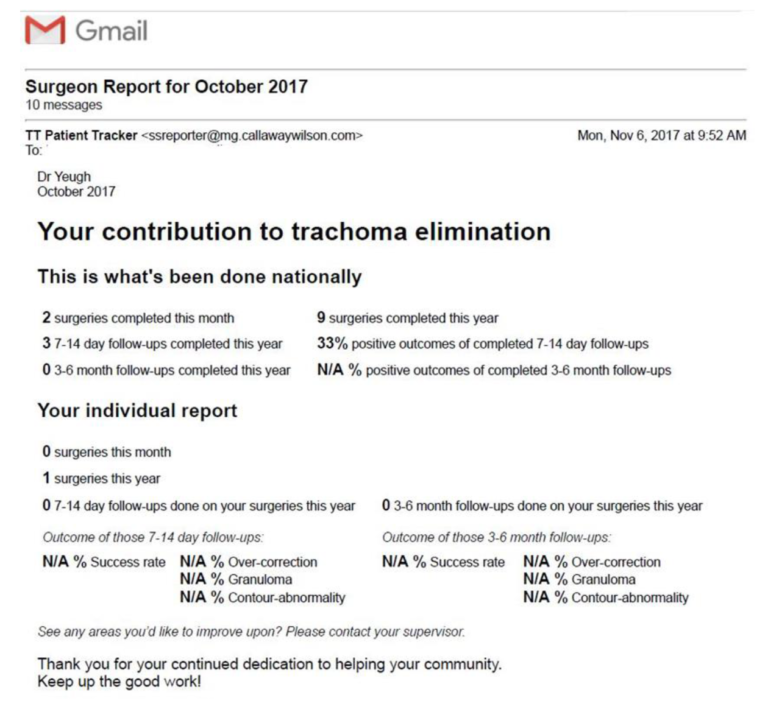
Example of monthly email sent to TT surgeon with a personalised output report
(Click to enlarge)
Programme activity dashboards: The TT Tracker includes an online reporting tool which analyses data automatically. These reports include three dashboards: Surgery and Follow-up Completion, Outcome Assessments and Session Activities, and a Data Quality Assessment page.
The reports are updated daily and can be filtered by time and location.
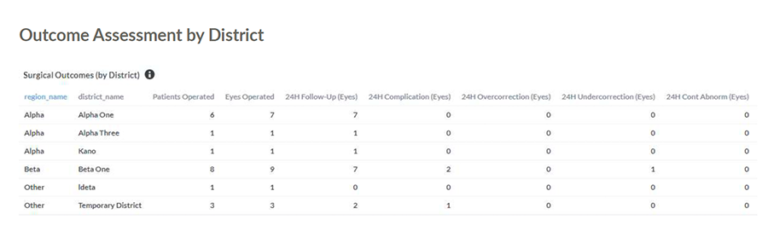
Example of an Outcome Assessment dashboard showing surgical and follow-up outcomes by region and district
(Click to enlarge)
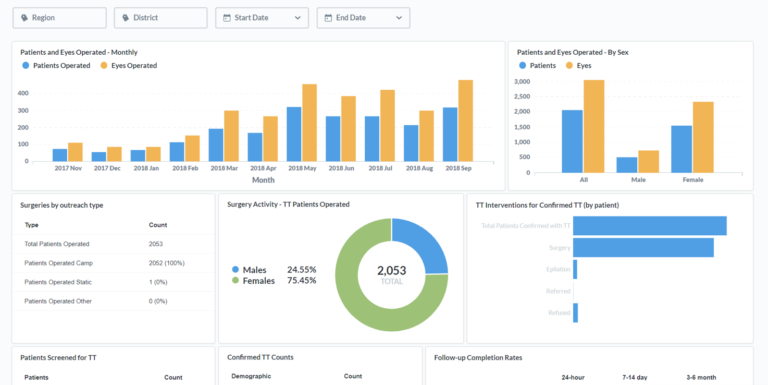
Example of a Surgery and Follow-up Completion dashboard (Click to enlarge)
How is the system managed?
All national trachoma programmes are invited to explore use of the TT Tracker. Sightsavers supports technical elements of the TT Tracker (platform hosting, reporting tools, emailing systems), offers training to administrators and field teams and provides support during implementation. Implementing partners and Ministries manage field activities and use.
Who owns the data?
Data are owned by Ministries of Health. Sightsavers trains an administrator from each Ministry of Health.
The TT Tracker is being used in Benin, Guinea, and Nigeria, with plans underway for use in Ethiopia, Senegal, Zimbabwe and Pakistan.
For more information visit: https://www.tttracker.org
As you read this article, consider what are the practical opportunities that this technology can provide against what is already in use, in your setting?





