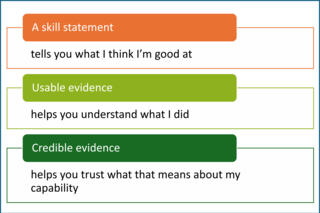
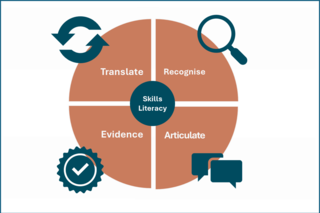
In the previous step, you explored how students demonstrate capability through everyday tasks. The next challenge is naming those skills clearly. When we talk about skills, we often use different …
In this video , you’ll explore what is happening when Jake is working on a robotics task. At first glance, this might look like a typical STEM activity. But as …
In this short video, we introduce the idea of weak and strong signals of skill. You will explore the difference between: completing a task demonstrating capability being able to recognise …
Think about a typical lesson. Students are working on a task. Some are collaborating, some are stuck, some are revising their work after feedback. You move around the room, checking …
One approach that makes the cumulative nature of learning more visible is phenomenon-based learning, developed and widely used in Finland. Rather than organising learning by subject, phenomenon-based learning starts with …
Global frameworks provide a compelling vision for the future of education. But for many educators, the challenge lies in translating these ideas into everyday classroom practice. Terms like transformative competencies, …
Across the world, there is growing agreement that education needs to do more than deliver subject knowledge. Schools are increasingly expected to prepare students for a future that is uncertain, …
Credible evidence is not just understandable. It is something others can trust and use with confidence. This is what allows learning to be recognised beyond the classroom. From Usable to …
So far, you’ve explored how skills are already developing in everyday learning, and how different frameworks describe similar capabilities using different language. The next step is making sense of this …
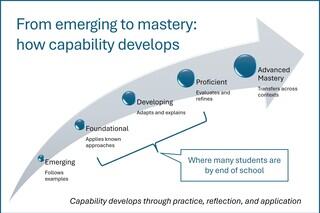
When we talk about transferable or durable skills, it can be tempting to think of them as something students either have or don’t have. In reality, skills develop over time. …